The Art of the Clean Braze: Why Nitrogen-Purged Copper Lines Matter in Texas Heat
Behind-the-scenes brazing on a South Texas residential air handler installation
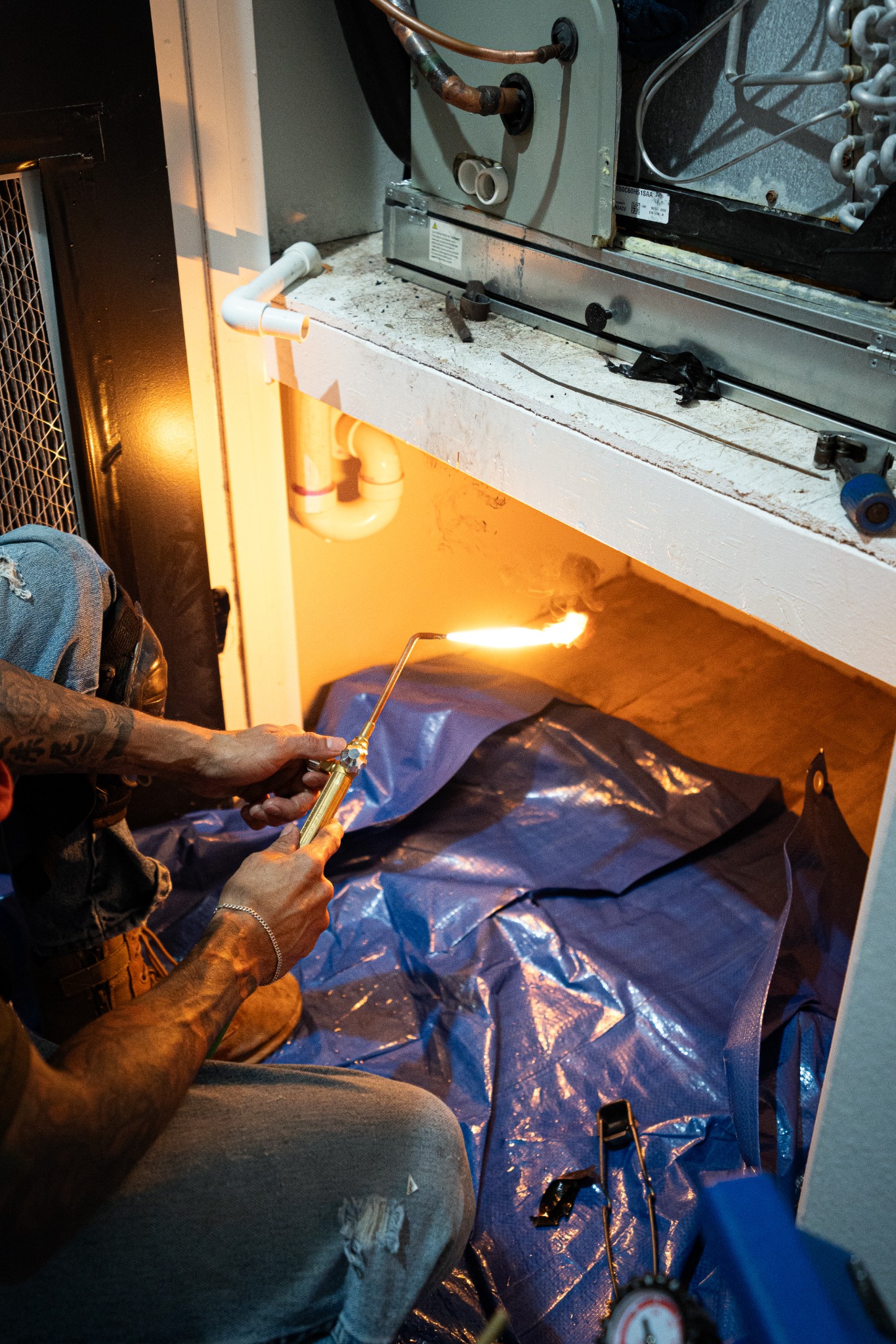
Every technician knows the feeling of lighting up the oxy-acetylene torch in a tight utility closet or garage in 100°F South Texas heat. Brazing copper refrigerant line sets isn't just about melting rod into a joint — it's the exact moment that determines whether a system holds pressure for fifteen years or leaks refrigerant after the first hard summer.
1Why Nitrogen Purging is Non-Negotiable
Whenever copper is heated to brazing temperature (around 1,100°F to 1,500°F) in the presence of oxygen, black copper oxide scale forms instantly on the inside of the tubing. If that scale flakes off into the closed refrigerant loop, it travels straight into your thermal expansion valve (TXV), filter drier, or compressor scroll.
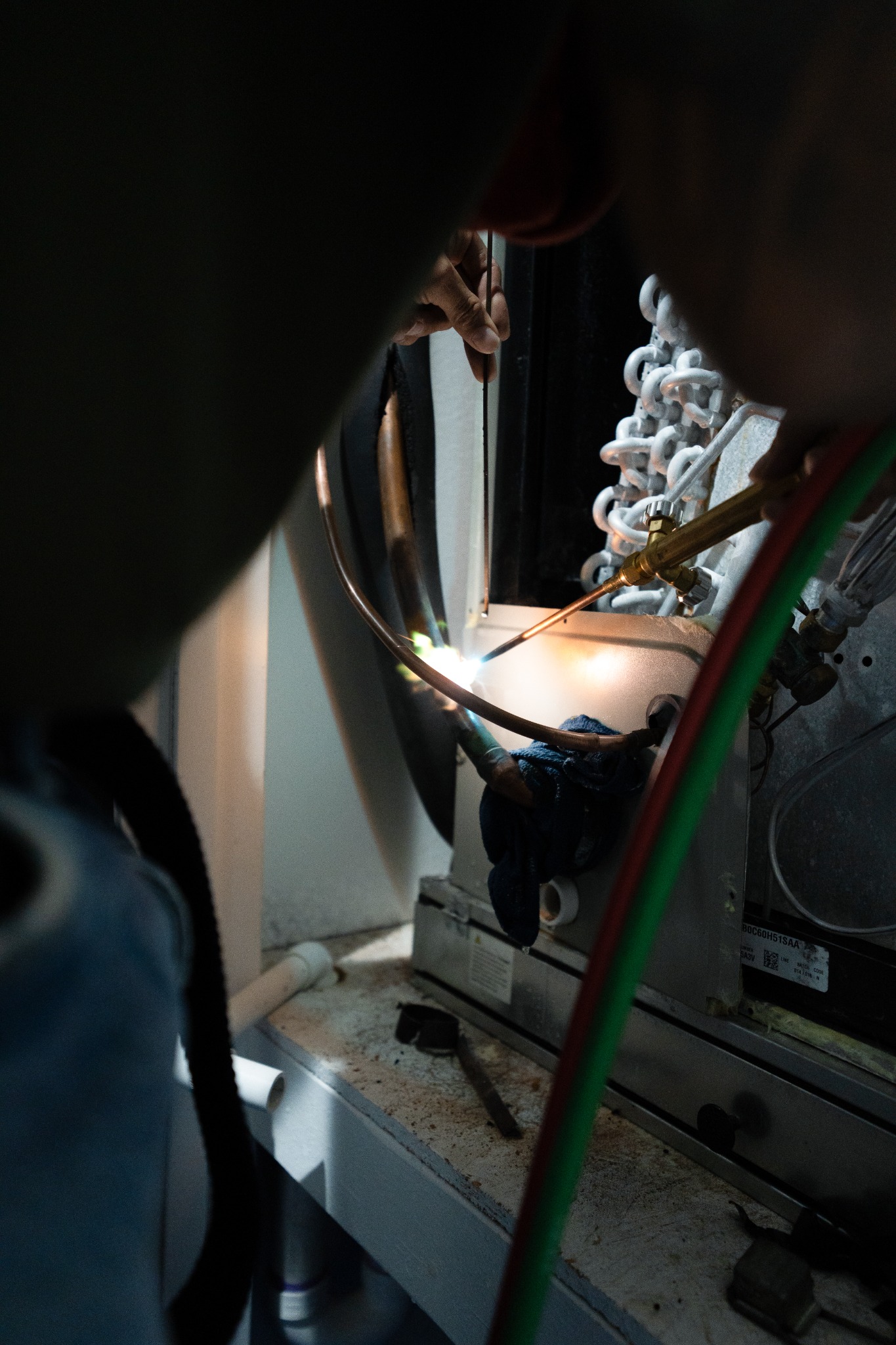
At Alpha, every line brazed on an installation or major repair is flowed with dry nitrogen at a gentle trickle (2 to 5 SCFH). Nitrogen displaces the oxygen inside the tubing, ensuring the interior walls stay mirror-clean while the silver-bearing alloy bonds seamlessly on the outside.
2Heat Control & Thermal Protection
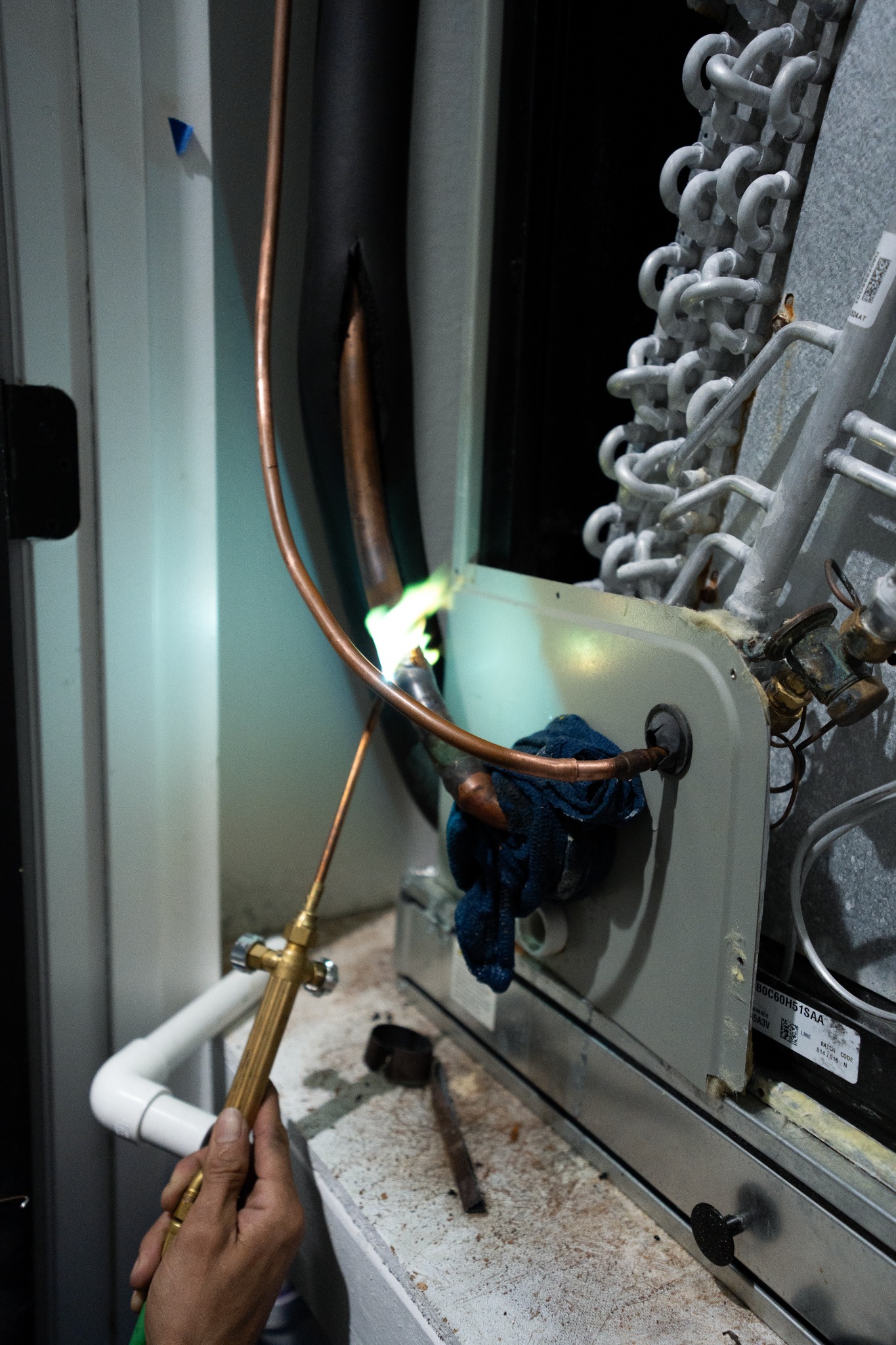
Notice the wet blue rag wrapped tightly around the service stub in the photo. Evaporator coils come with factory brass fittings, sensitive internal rubber grommets, and TXV power heads that can be destroyed by stray heat conduction in seconds.
Our techs apply specialized heat-absorbing wet wraps and thermal paste around the joint before lighting the flame. We heat the copper pipe first, pull heat toward the fitting socket, and let capillary action draw the brazing alloy deep into the hub for a 360-degree hermetic seal.
3Triple Evacuation & Micron Gauge Verification
Once all joints cool naturally (never quenched with cold water, which causes brittle micro-fractures in the copper), we pressure test with dry nitrogen to 350+ PSI and let it hold. After confirming zero decay, we pull the system down to below 500 microns on a digital vacuum gauge.
This removes all non-condensables and moisture before a single drop of refrigerant is released into the coils. That level of discipline is what separates a 15-year reliable install from a system that breaks every July.
The Alpha Standard
Whether you're in McAllen, Mission, Edinburg, or Harlingen, Alpha's factory-trained technicians treat every copper joint as a permanent structural weld. When you hear the torch ignite on your job, you know your system is being built to withstand the harshest Texas summers.
Need Fast AC Repair or Preventive Maintenance?
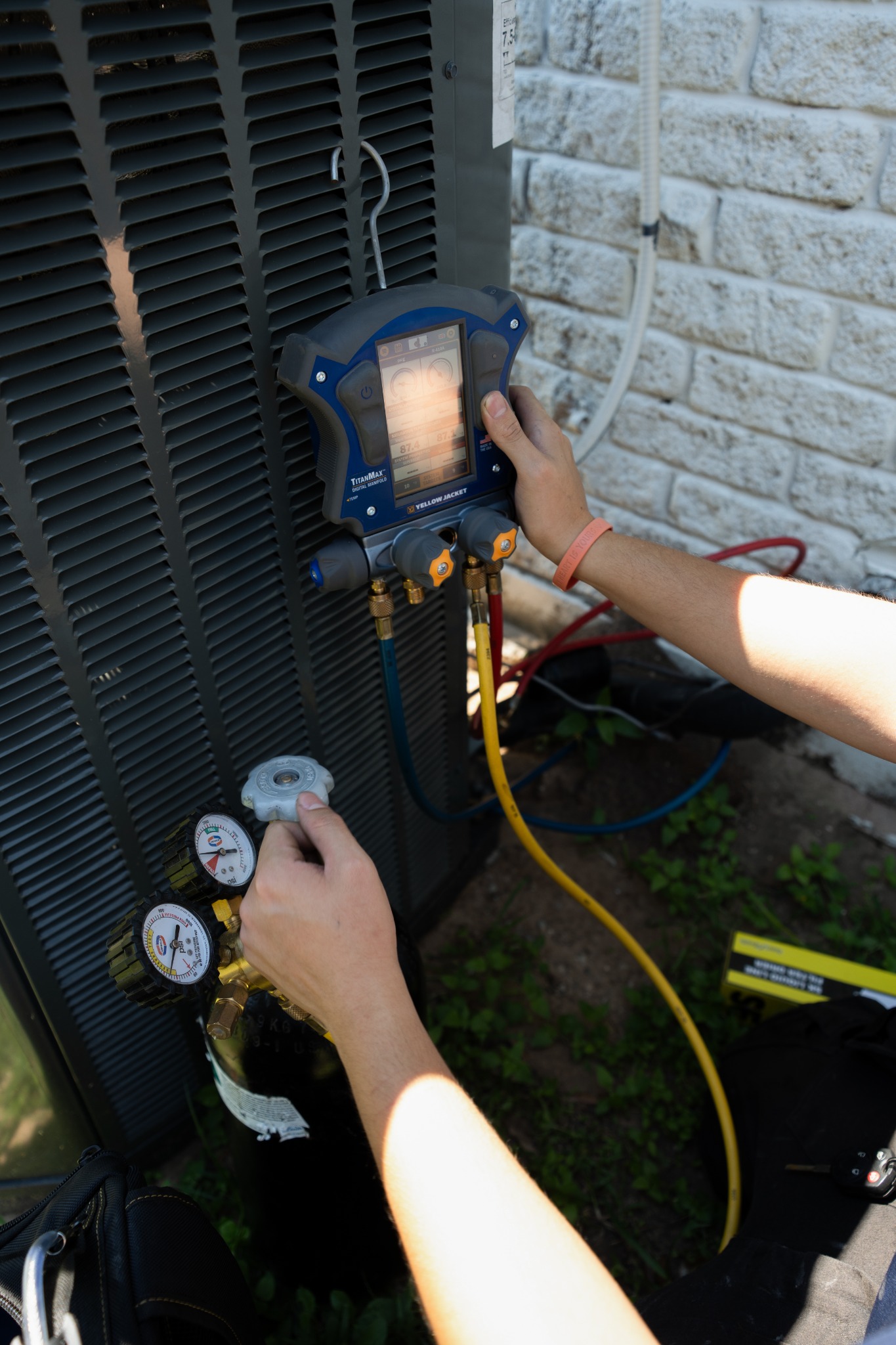
Our factory-trained technicians arrive equipped with digital manifolds, nitrogen flow rigs, and fully-stocked trucks to solve your AC issues correctly on the first visit.